Just diagnosed with prediabetes? Learn what your diagnosis means and the practical first steps you can take with food, physical activity and everyday habits.
Just Diagnosed With Prediabetes? Start Here
If you’ve recently been told you have prediabetes, you may have left your appointment with more questions than answers.
What should I eat now?
Do I need to stop eating carbohydrates?
Can I still eat rice, bread or fruit?
Do I need to lose weight?
And perhaps the biggest question of all:
Am I definitely going to develop type 2 diabetes?
A prediabetes diagnosis is something to take seriously, but it doesn’t mean you need to panic or completely overhaul your life overnight.
There are practical changes you can make to support your blood sugar and reduce your risk of progressing to type 2 diabetes.
The important thing is knowing where to start.
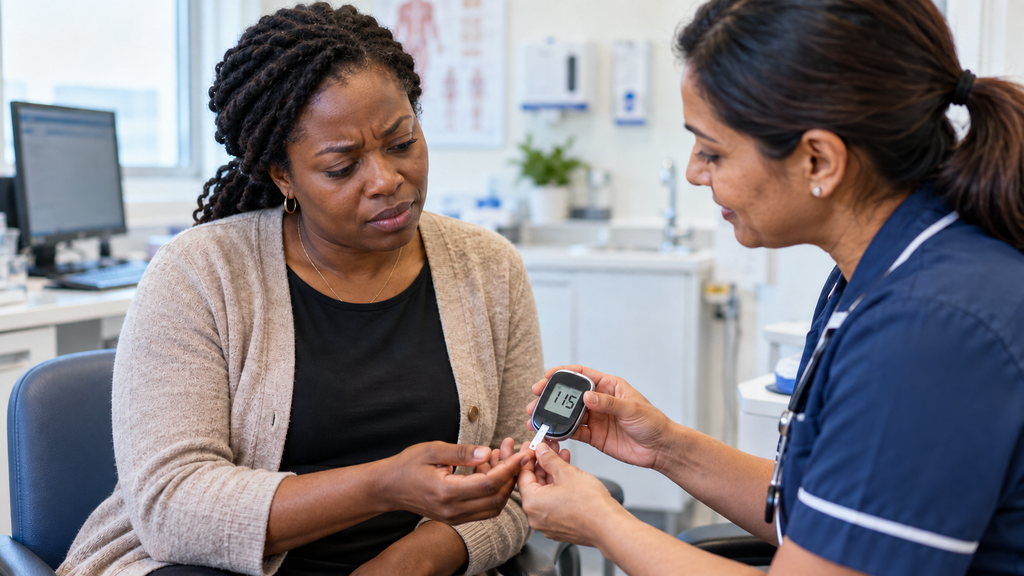
So What Should You Do After a Prediabetes Diagnosis?
1. First, Understand What Prediabetes Actually Means
Prediabetes means your blood glucose is higher than the normal range but has not reached the threshold used to diagnose type 2 diabetes.
In most countries, an HbA1c of 42–47 mmol/mol is commonly described as prediabetes or non-diabetic hyperglycaemia.
You may also see different numbers online, particularly on American websites. For example, the American Diabetes Association defines prediabetes as an HbA1c of 5.7–6.4% (39–47 mmol/mol).
This difference is one reason it’s important to discuss your individual result with the healthcare professional who arranged your test rather than trying to interpret one number you found online.
Prediabetes usually doesn’t cause obvious symptoms. Many people discover it after a routine blood test or health check.
Most importantly, prediabetes does not mean that developing type 2 diabetes is inevitable.
It means your blood glucose is in a range where taking action is worthwhile.
2. Don’t Respond by Cutting Out Every Carbohydrate
One of the first reactions I often see when someone discovers their blood sugar is high is:
“I need to stop eating carbs.”
That can quickly turn into:
No rice.
No bread.
No potatoes.
No pasta.
No fruit.
No yam.
But managing prediabetes does not require you to eliminate every carbohydrate food from your diet.
Carbohydrates do affect blood glucose, so the type and amount you eat matter. But carbohydrate-containing foods are not all nutritionally the same.
For example, beans, lentils, whole grains, fruit and vegetables can provide valuable nutrients and fibre.
Instead of starting with a long list of foods you’re no longer “allowed” to eat, start looking at the overall quality and balance of your diet.
3. Start Building More Balanced Meals
A useful first step is to look at what you normally put on your plate.
Ask yourself:
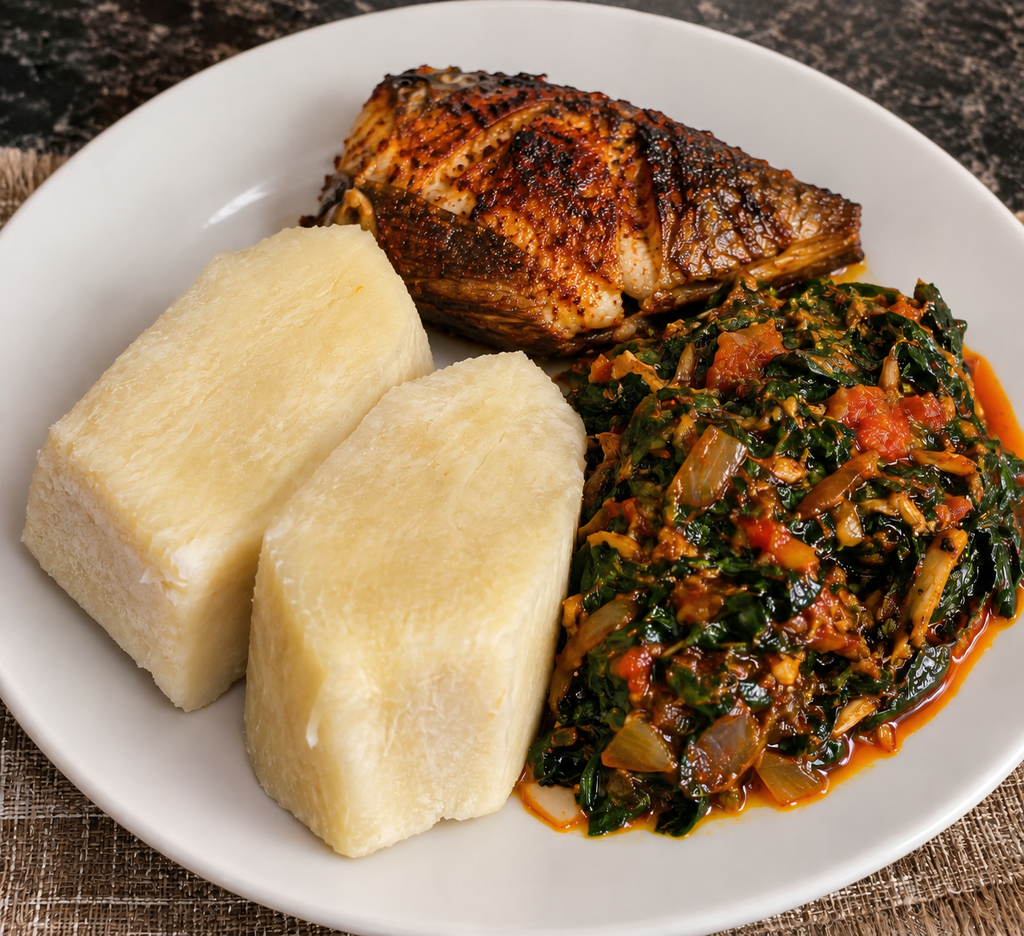
Where is my protein?
This might be fish, chicken, eggs, beans, lentils, yoghurt, tofu or another protein food you enjoy.
Where are my vegetables?
Look for realistic ways to increase the variety and amount of non-starchy vegetables in your meals.
And then look at your carbohydrate food.
That could be rice, pasta, potatoes, bread, couscous, yam, plantain, garri, eba, amala or another staple food.
Rather than automatically removing it, consider the portion, quality and rest of the meal.
For example, imagine a plate dominated by a very large portion of rice with little vegetable or protein.
Now compare that with a meal containing an appropriate portion of rice alongside vegetables and a good source of protein.
The rice hasn’t necessarily disappeared.
The meal has changed.
That is a much more practical way to think about eating for better blood sugar.
4. Include More Fibre-Rich Foods
Fibre is another useful area to consider when looking at your current diet.
Higher-fibre carbohydrate choices can include foods such as:
Beans and lentils
Whole grains
Oats
Wholegrain bread
Vegetables
Whole fruit
Nuts and seeds
You don’t have to suddenly transform every meal.
Look at what you already eat and ask:
“Where could I add more fibre?”
If you eat rice regularly, perhaps beans or more vegetables could become part of the meal.
If you normally have toast for breakfast, could a higher-fibre bread work for you?
If fruit juice is your usual choice, could you sometimes have whole fruit instead?
Small changes like these can be easier to maintain than trying to follow a completely unfamiliar diet.
5. Look at What You’re Drinking Too
Food isn’t the only place carbohydrates and added sugars can appear.
Sugary drinks can provide a significant amount of sugar without making you feel particularly full.
This includes drinks such as regular fizzy drinks and some sweetened coffees, energy drinks and other sugary beverages.
If these are part of your regular routine, reducing them can be a useful place to start.
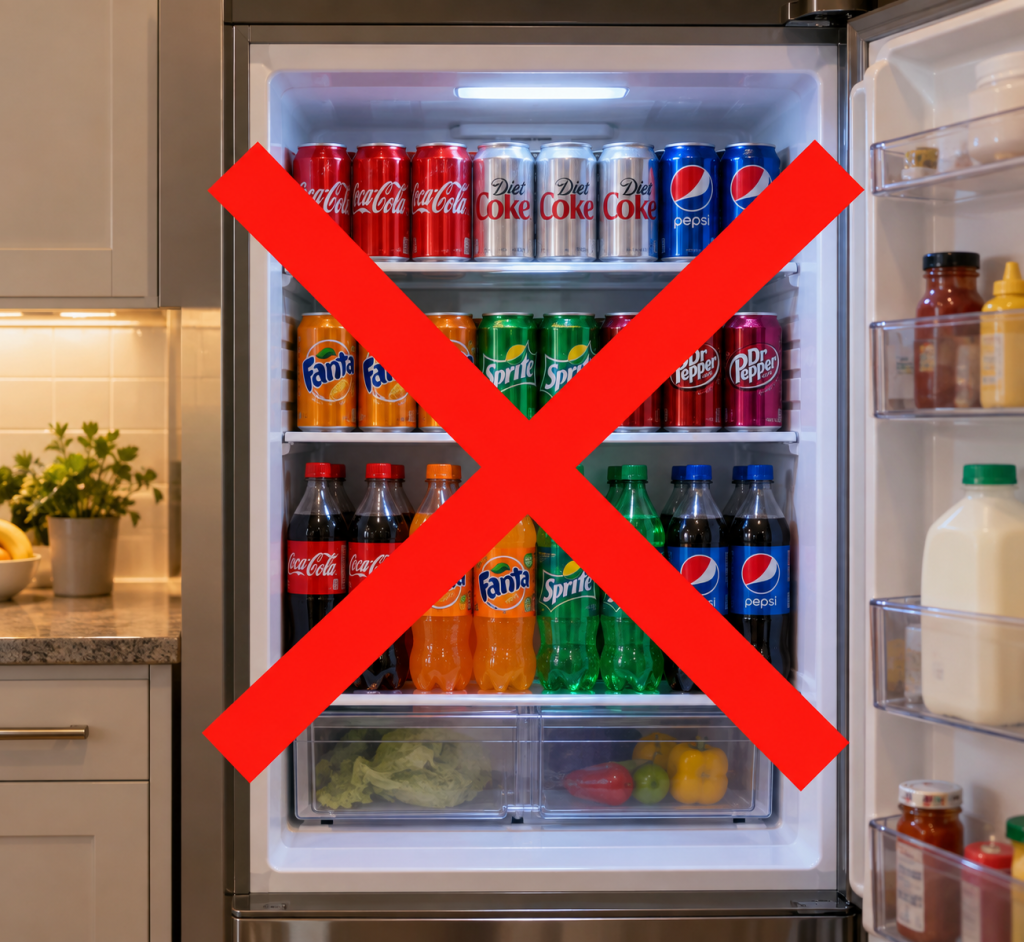
Water is an obvious option, but this doesn’t mean water is the only thing you’re ever allowed to drink.
Unsweetened tea or coffee and no-added-sugar alternatives may also be options depending on your preferences.
Again, you don’t have to change everything today.
If you regularly have several sugary drinks, start with one realistic change.
6. Make Movement Part of Your Plan
Food gets a lot of attention when we talk about prediabetes, but physical activity matters too.
Your muscles use glucose for energy, and being physically active can help improve the way your body responds to insulin.
That doesn’t mean you suddenly need to become a runner or spend seven days a week in a gym.
Walking counts.
Strengthening activities count.
Breaking up long periods of sitting can also be useful.
Think about your current routine.
Could you walk more during your day?
Could you take a short walk after a meal?
Could you gradually introduce some resistance or strength-based exercise?
Could you break up long periods spent sitting at your desk or watching television?
The best activity plan isn’t necessarily the most impressive one.
It’s one you can realistically keep doing.
If you have a medical condition or concerns about starting a new exercise programme, speak to your healthcare professional about what is appropriate for you.
7. Do You Need to Lose Weight If You Have Prediabetes?
Not everybody with prediabetes needs to lose weight.
Prediabetes can occur in people across different body sizes.
However, if you are living with overweight or obesity, weight loss may help improve insulin sensitivity and reduce your risk of progressing to type 2 diabetes.
That doesn’t mean you need to chase an unrealistic number on the scales or follow an extreme diet.
The approach should be appropriate for you, your health, your current weight and your circumstances.
And if weight loss isn’t appropriate for you, changes to food quality and physical activity can still be valuable.
This is an area where individualised advice from your GP, diabetes healthcare team or Registered Dietitian can be particularly helpful.
8. Prioritise Sleep and other Habits
Blood sugar isn’t influenced by food alone.
Sleep, stress, physical activity and other aspects of your health can also affect metabolic health.
So if you’re spending all your energy trying to create the “perfect” diet while regularly getting very little sleep or sitting for most of the day, it may be worth looking at the bigger picture.
You don’t need to optimise everything simultaneously.
Choose the areas where realistic changes are possible.
9. Keep Your Follow-Up Appointments and Blood Tests
Prediabetes shouldn’t simply be diagnosed and then forgotten about.
Your healthcare team may recommend follow-up blood tests to monitor whether your blood glucose is improving, remaining stable or moving higher.
Current guidance recommends ongoing monitoring for people with prediabetes, with the frequency depending on individual circumstances.
In the UK, you should generally be offered an HbA1c or fasting glucose check at least annually.
You may also be offered support through a type 2 diabetes prevention programme.
Take advantage of appropriate professional support where it’s available.
And don’t rely on symptoms to tell you whether your blood sugar has improved.
Prediabetes usually has no obvious symptoms, which is why follow-up testing matters.
10. Don’t Try to Fix Everything This Week
This might be one of the most important things I want you to take away from this article.
You don’t need to leave a prediabetes diagnosis and immediately:
throw away everything in your kitchen,
ban every carbohydrate,
join a gym,
buy expensive supplements,
start fasting,
and attempt to lose a large amount of weight by next month.
That’s a lot.
And it can make prediabetes management feel impossible before you’ve even started.
Instead, look at your current lifestyle and choose one or two meaningful changes.
Maybe your first change is replacing regular sugary drinks more often.
Perhaps it’s adding vegetables to your evening meal.
Maybe it’s walking more regularly.
Or perhaps it’s changing the balance of the meals you already enjoy.
Once that begins to feel normal, you can build from there.
Better blood sugar doesn’t require perfection. It requires changes you can actually maintain.
What About African and Nigerian Foods?
If rice, yam, plantain, garri, eba, amala or other African foods are part of your usual diet, a prediabetes diagnosis does not automatically mean abandoning them.
These foods still need to be considered in the context of their carbohydrate content, portion and the overall meal.
But cultural foods don’t sit outside the principles of healthy eating.
For example, instead of simply declaring jollof rice “bad”, look at how much rice you’re serving and what accompanies it.
Instead of assuming you can never eat swallow again, look at the portion, the soup, vegetables, protein and the meal as a whole.
The same principle applies whether your usual carbohydrate is rice, bread, pasta, potatoes, yam or eba.
The goal is not to choose between your culture and your health.
It’s to understand your food well enough to make informed choices.
Can Prediabetes Return to the Normal Blood Sugar Range?
For some people, yes.
Blood glucose can return below the prediabetes range following lifestyle changes.
You may hear this described as reversing prediabetes.
But I want to be careful with that word.
There is no guarantee that everyone with prediabetes will return to the normal blood glucose range, and your individual risk is influenced by several factors.
Even when blood glucose improves, continuing the habits that helped you get there and attending recommended follow-up tests remain important.
So rather than becoming fixated on the word “reversal”, focus on something you can act on:
What changes can I make now to improve my health and reduce my future risk?
Frequently Asked Questions
Do I need to stop eating carbohydrates if I have prediabetes?
No. Prediabetes does not automatically require a carbohydrate-free diet. The amount and type of carbohydrate, your overall dietary pattern and the composition of your meals all matter.
Can I eat rice with prediabetes?
Rice can be included. Consider the portion, the type of rice where appropriate, and what else is on your plate. Adding vegetables, beans or another fibre-rich food and a source of protein can help you build a more balanced meal.
Can I eat fruit with prediabetes?
Whole fruit can be part of a healthy eating pattern for people with prediabetes. Fruit provides fibre, vitamins, minerals and other nutrients. Fruit juice and smoothies are different because it can be much easier to consume larger amounts of free sugars quickly.
Does everyone with prediabetes develop type 2 diabetes?
No. Prediabetes increases your risk of developing type 2 diabetes, but progression is not inevitable. Lifestyle changes and appropriate support can reduce that risk.
Should I buy a continuous glucose monitor if I have prediabetes?
A continuous glucose monitor is not required to diagnose prediabetes. Prediabetes is diagnosed using appropriate blood tests. If you’re considering buying a CGM, discuss whether the information would be useful for your individual circumstances with your healthcare professional.
How often should my blood sugar be checked?
This depends on your individual situation. Current guidance recommends that people with prediabetes are monitored for progression to type 2 diabetes at least annually, with testing adjusted according to individual risk.
Your Prediabetes Starting Checklist
If you’re wondering what to do next, keep it simple.
☐ Understand your blood test result.
☐ Attend recommended follow-up appointments.
☐ Look at the balance of your usual meals.
☐ Include more fibre-rich foods.
☐ Reduce sugary drinks if they’re a regular part of your diet.
☐ Find realistic ways to move more.
☐ Discuss weight management with a healthcare professional if it is appropriate for you.
☐ Choose one or two changes to start with.
☐ Keep going with your recommended blood sugar monitoring.
And remember:
You don’t have to give up the foods you love or create a perfect diet overnight.
Start with practical changes you can maintain.
Ready for Your Next Step?
Knowing that you should “eat better” is one thing.
Knowing what to put on your plate is another.
Download the ThriveWithOly Diabetes Meal Builder for a simple, practical guide to building more balanced meals for better blood sugar.
Click here to download: https://thrivewitholy.com/nigerian-diabetes-meal-builder/
This article provides general nutrition education and is not a substitute for individual medical or dietetic advice. Speak with your healthcare professional about your diagnosis, blood test results, medication and individual treatment needs.