If you have type 2 diabetes, there is a good chance someone has told you:
“You need to stop eating carbs.”
And suddenly, you are looking at almost everything you normally eat differently.
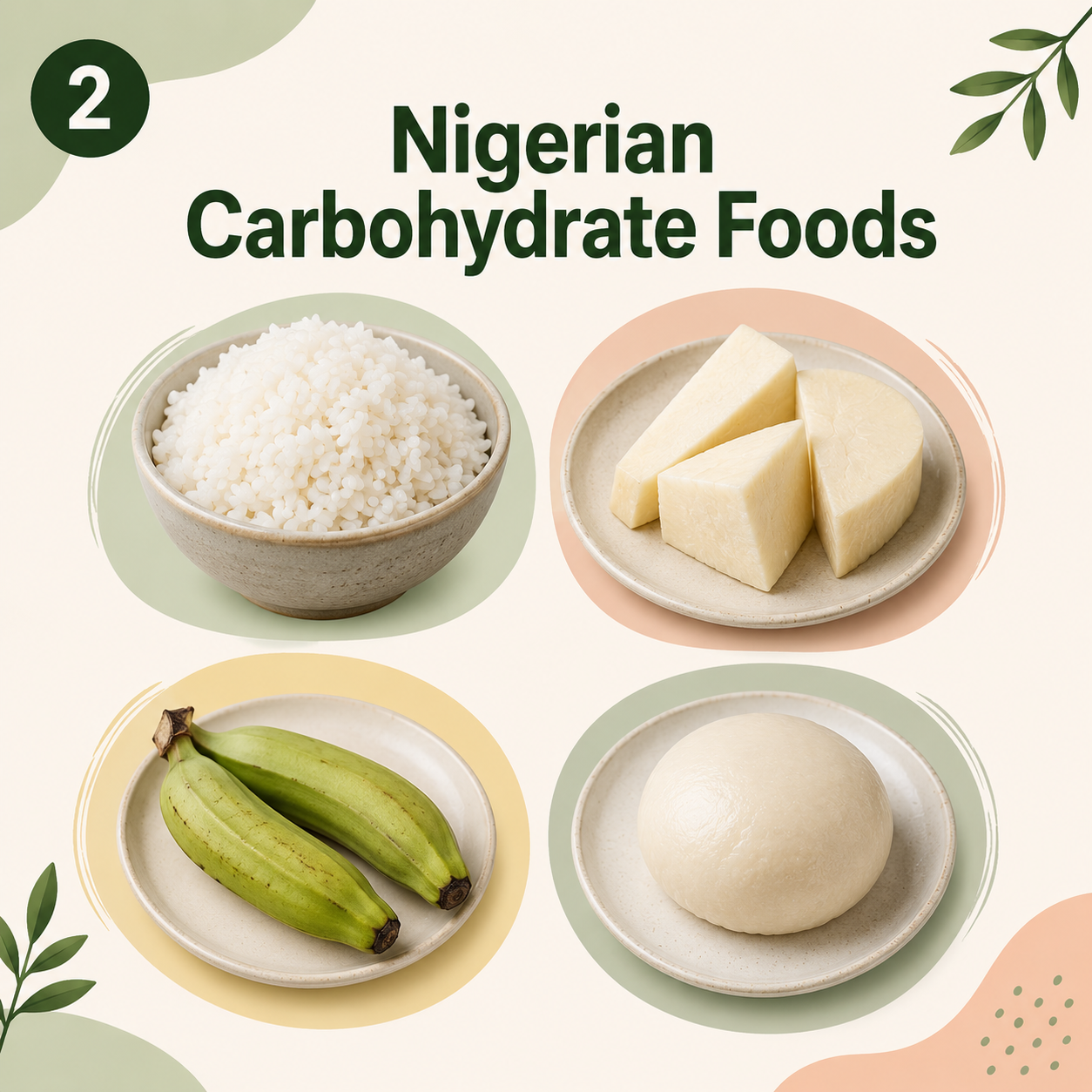
Rice? Carbohydrate.
Yam? Carbohydrate.
Plantain? Carbohydrate.
Garri, eba, amala or pounded yam?
More carbohydrates.
Even beans and fruit contain carbohydrate.
So you may be wondering:
“If carbohydrates affect my blood sugar, am I supposed to stop eating all of these foods?”
The short answer is no.
People with type 2 diabetes can eat carbohydrate-containing foods.
But understanding which carbohydrates you choose, how much you eat and what the rest of your meal looks like can help you make more informed decisions.
So rather than being afraid of carbohydrates, let’s understand them.
Can People With Type 2 Diabetes Eat Carbohydrates? Yes, People With Type 2 Diabetes Can Eat Carbohydrates
Carbohydrates do have an important relationship with blood glucose.
But that does not mean every carbohydrate-containing food needs to disappear from your diet.
There is no single carbohydrate intake or meal pattern that is right for everyone living with type 2 diabetes.
Instead, carbohydrate intake should be individualised.
It can be more helpful to move away from asking:
“Can I eat carbs?”
and start asking:
“Which carbohydrate am I choosing, how much am I eating, and what does the rest of my meal look like?”
That distinction matters.
Because “carbohydrates” include a wide range of foods.
Rice and sugary drinks both contain carbohydrate but they are not nutritionally identical.
Beans contain carbohydrate but they also provide fibre and plant protein.
Whole fruit contains carbohydrate but it also provides fibre, vitamins and minerals.
The goal is not simply to remove everything containing carbohydrate.
It is to understand carbohydrates well enough to make choices that work within your overall eating pattern and individual diabetes management.
What Are Carbohydrates?
Carbohydrates are one of the nutrients found in food.
They include starches, sugars and fibre.
Carbohydrate-containing foods include:
rice
yam
plantain
garri and eba
amala and other swallows
fufu and pounded yam
bread
pasta
cereals
potatoes
beans and pulses
fruit
milk and yoghurt
sweets
sugary drinks.
This is one reason the instruction to simply “stop eating carbs” can become confusing very quickly.
Carbohydrate does not mean only table sugar, sweets or sugary drinks.
And carbohydrate-containing foods are not all nutritionally the same.
What Happens to Carbohydrates When You Eat Them?
Digestible carbohydrates are broken down into glucose.
That glucose enters your bloodstream, which is why carbohydrate-containing foods can raise your blood glucose after eating.
That fact sometimes gets translated into:
“Carbohydrates turn into sugar, so people with diabetes shouldn’t eat them.”
But that conclusion is too simplistic.
A rise in blood glucose after eating a carbohydrate-containing meal does not automatically mean you have eaten something “bad”.
And the size of the glucose response can vary.
Instead of trying to eliminate every food that contains carbohydrate, it is more useful to understand some of the things that matter when choosing and eating them.
One of the most important is how much carbohydrate you actually eat.
Why the Amount of Carbohydrate Matters
Imagine sitting down to a plate of rice.
The question is not only:
“Is this rice?”
It is also:
“How much rice am I eating?”
The total amount of carbohydrate you eat is a major determinant of your blood glucose response after eating.
This is why portion awareness is such an important part of understanding diabetes and carbohydrates.
A very large serving of a carbohydrate food and a smaller serving are not the same simply because the food has the same name.
That doesn’t mean everybody with type 2 diabetes needs exactly the same portion.
They don’t.
There is no universal scoop, fist size or number of grams that is automatically right for every person.
Your individual needs can depend on factors such as your health, medication, activity, preferences and goals.
But becoming aware of your portions is a useful place to start.
At your next meal, try asking yourself:
“Where is most of the carbohydrate in this meal coming from, and how much am I actually serving?”
Awareness comes before adjustment.
Are Some Carbohydrates Better Choices Than Others?
Amount matters, but carbohydrate quality matters too.
Higher-fibre, less-refined carbohydrate foods can be useful choices where practical.
Examples include foods such as:
vegetables
whole fruit
wholegrains
beans and pulses.
Fibre-rich carbohydrate foods are encouraged as part of healthy eating for people with type 2 diabetes.
But there is an important distinction here.
Higher fibre does not mean unlimited.
And choosing a wholegrain carbohydrate does not mean it cannot affect your blood glucose.
The amount you eat still matters.
The useful message is not:
“Find a healthy carbohydrate and eat as much as you want.”
It is:
“Consider both the quality and the amount of carbohydrate you eat.”
What About Sugary and Highly Refined Carbohydrates?
Not all carbohydrate-containing foods need to play the same role in your diet.
Foods and drinks high in free sugars, including sugary drinks, should be limited.
Highly refined carbohydrate foods should also not crowd out more nutritious, fibre-rich choices.
But this is very different from saying:
“All carbohydrates are sugar, so avoid them all.”
A bowl of beans and a bottle of sugary drink both contain carbohydrate.
That doesn’t make them nutritionally equivalent.
This is why understanding carbohydrates is more useful than simply fearing them.
Do You Need to Follow a Low-Carb Diet for Type 2 Diabetes?
Not necessarily.
A lower-carbohydrate diet can be one option for some adults with type 2 diabetes.
But it is not the only appropriate eating pattern, and having type 2 diabetes does not automatically mean you must follow a low-carbohydrate or ketogenic diet.
Importantly, low carbohydrate does not mean no carbohydrate.
The right approach needs to consider the individual.
That includes your nutritional needs, food preferences, culture, medication and whether the eating pattern is something you can realistically sustain.
If you are considering substantially reducing your carbohydrate intake, medication is particularly important.
People using insulin or medicines that can cause low blood glucose may require professional advice when making substantial changes to carbohydrate intake.
Very-low-carbohydrate approaches also require additional caution with certain diabetes medicines.
So rather than making a dramatic change based on something you saw online, discuss significant carbohydrate restriction with your diabetes healthcare team or Registered Dietitian.
What Is the Glycaemic Index and Does It Matter?
You may also have heard people talk about the glycaemic index, or GI.
GI provides information about how carbohydrate-containing foods affect blood glucose.
Lower-GI carbohydrate choices may be useful as one part of meal planning.
But GI does not tell you everything you need to know about a food or meal.
It does not replace thinking about:
- how much carbohydrate you are eating
- portion size
- fibre
- overall nutritional quality
- what else you are eating
- the complete meal.
This is particularly important with Nigerian foods.
You may see online lists declaring one swallow “good for diabetes” because of its supposed GI and another “bad”.
Real meals are more complicated than a single number.
GI can provide useful information.
It should not become another way to divide all your food into “safe” and “unsafe” categories.
What About Rice, Yam, Plantain and Nigerian Swallows?
This is where carbohydrate advice becomes very personal for many Nigerians.
It is one thing to hear:
“Reduce your carbs.”
It is another to look at the foods you have eaten all your life and wonder what is left.
Rice is a carbohydrate-containing food.
So is yam.
Plantain contains carbohydrate.
Garri/eba, amala, semovita, fufu and pounded yam are carbohydrate-containing foods too.
But recognising them as carbohydrate foods does not mean automatically banning them.
Instead, start by asking three questions.
1. Which food is providing most of the carbohydrate?
If you’re having rice, rice may be the main carbohydrate.
If you’re having yam, it may be the yam.
If you’re having soup and swallow, the swallow may provide a significant part of the carbohydrate.
Recognising the carbohydrate is the first step.
2. How much am I eating?
Once you know where the carbohydrate is coming from, look at the amount.
Does the rice take over almost the entire plate?
Is the swallow much larger than everything else in the meal?
Could the balance of the meal look different?
Remember, there is no universal Nigerian carbohydrate portion that is right for everybody.
The point is to become aware of the amount rather than eating on autopilot.
3. What am I eating with it?
A Nigerian meal is rarely just one ingredient.
If you’re having rice, what else is on the plate?
If you’re having yam, are there vegetables and eggs or fish?
If you’re having swallow, what is in the soup?
Looking at the whole meal gives you much more useful information than deciding that one familiar Nigerian food is simply “good” or “bad”.
How to Build a Balanced Meal With Carbohydrates
Now we get to the practical part.
If you can eat carbohydrates with type 2 diabetes, how do you actually put a meal together?
Start with the carbohydrate.
Step 1: Identify your carbohydrate
Ask:
“Where is most of the carbohydrate in this meal coming from?”
It could be rice, yam, plantain, swallow or another carbohydrate-containing food.
Step 2: Check the amount
Ask:
“How much am I serving?”
You are not looking for a universal “perfect” portion.
You are learning to notice how much is actually on your plate and how prominent the carbohydrate is within the meal.
Step 3: Add plenty of non–starchy vegetables
Think about where vegetables can fit.
With rice, that could mean making vegetables more prominent on the plate.
With soup and swallow, it could mean choosing a vegetable-rich soup and allowing the soup to play a bigger role in the meal.
Step 4: Include an appropriate protein source
Depending on the meal, this might include:
fish
eggs
chicken or other poultry
lean meat
beans or pulses.
Protein contributes to a balanced meal and can support satiety.
But protein does not “cancel out” the carbohydrate you eat.
Adding fish to an enormous portion of rice does not make the amount of rice irrelevant.
Step 5: Think about fibre and carbohydrate quality
Where practical, consider higher-fibre choices such as vegetables, beans, pulses, wholegrains and whole fruit.
Again, these foods are not magic.
They are simply part of building a more nutritious overall eating pattern.
Step 6: Look at the whole meal
Finally, stop judging one ingredient in isolation.
Look at your entire plate.
Look at the carbohydrate portion.
Look at the vegetables.
Look at the protein.
Consider how the food was prepared.
And think about how the meal fits your individual diabetes management plan.
Know the principle. Now build the plate.
Understanding carbohydrates is useful.
But the real challenge often comes when you’re standing in your kitchen wondering what to do with the rice, yam, plantain, beans or soup you actually have.
That’s why I created The Nigerian Diabetes Meal Builder.
It gives you a practical framework for building more balanced meals using familiar Nigerian foods; without relying on a rigid meal plan or assuming you need to give up the foods you enjoy.
[Download The Nigerian Diabetes Meal Builder]
Use it to practise identifying the carbohydrate, checking the amount, adding fibre-rich plant foods, including protein, considering preparation and making the meal work for your individual needs.
What Could This Look Like With Nigerian Food?
Let’s make the principle more concrete.
Rice
Instead of asking: “Can I eat rice?”
Try: “How much rice am I having, and what am I eating with it?”
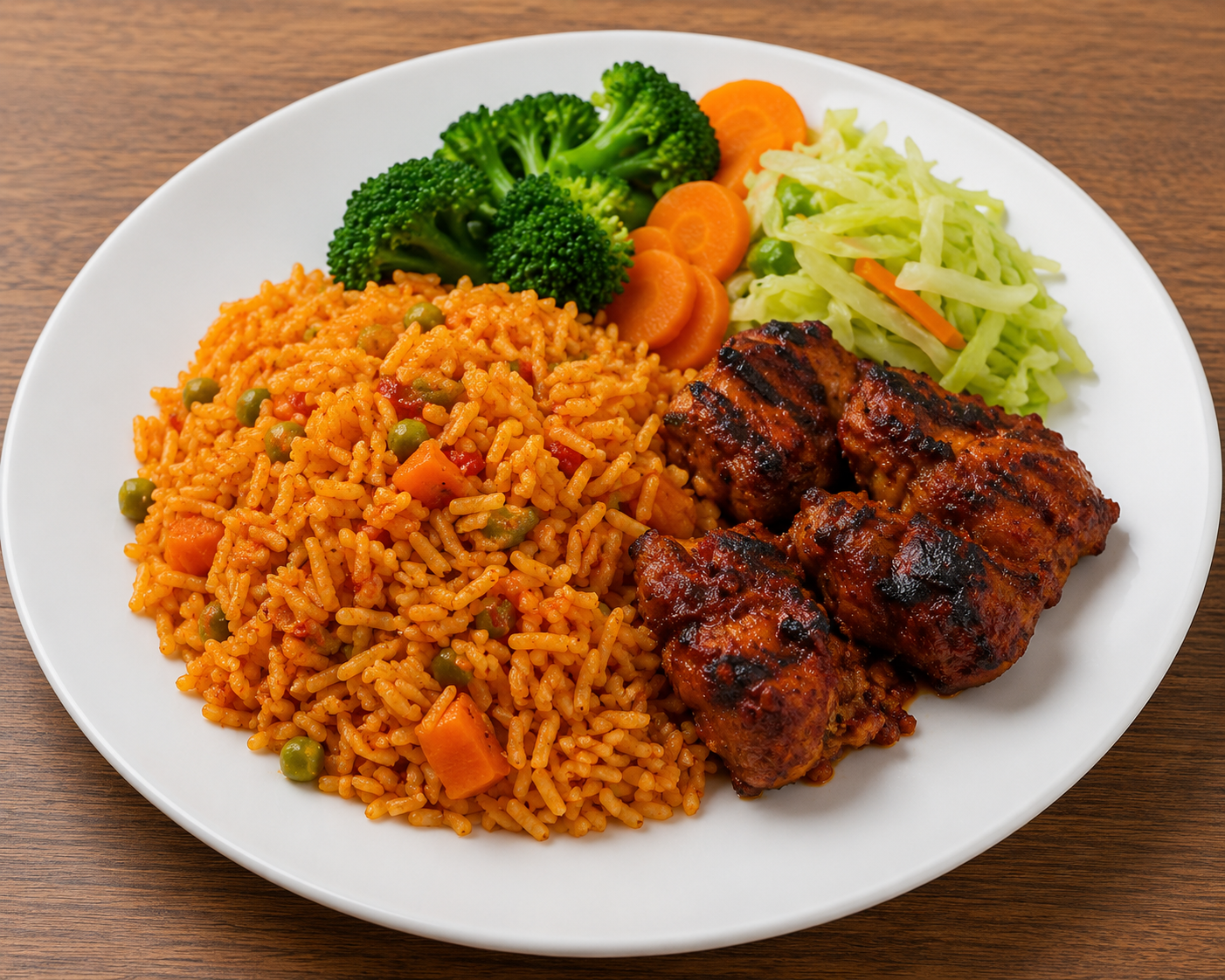
You might build the meal around a considered rice portion, plenty of vegetables and an appropriate protein source.
Yam
Yam can be identified as the carbohydrate part of the meal.
Then look at the amount and what accompanies it.
Could you include vegetables and eggs, fish or another suitable protein source rather than allowing yam to dominate the meal?
Plantain
Again, recognise that plantain contributes carbohydrate.
Consider the amount, preparation and what else is in the meal.
Swallow and soup
Instead of automatically serving a very large portion of swallow with a small amount of soup, think about the balance.
Could you choose an appropriate portion of swallow alongside plenty of vegetable-rich soup and an appropriate protein source?
These aren’t rigid meal plans.
They are examples of meal-building thinking.
The specific portion that is appropriate for you may differ from the portion appropriate for somebody else.
Does Protein Stop Carbohydrates From Raising Blood Sugar?
No.
Protein can be an important part of a balanced meal.
Foods such as fish, eggs, lean meat, poultry, beans and pulses can provide protein.
But adding protein does not neutralise carbohydrate.
Similarly, vegetables and fibre do not “erase” the carbohydrate in your meal.
Protein, fibre and fat can affect digestion and meal composition, but they should not be treated as tricks that guarantee your blood glucose will not rise.
The goal is to build a nutritionally balanced meal—not to find a food that magically cancels another one.
Can You Eat Fruit if You Have Type 2 Diabetes?
Yes, whole fruit can be included.
Fruit contains carbohydrate, so the amount you eat still matters.
But the naturally occurring sugars in whole fruit should not be treated in exactly the same way as the free sugars found in sugary drinks, sweets or juice.
Whole fruit also provides fibre, vitamins and minerals.
Fruit juice and smoothies are different because they contain free sugars and can be easier to consume rapidly.
So a diabetes diagnosis does not automatically mean removing fruit.
Once again:
Look at the type of carbohydrate, the amount and your overall eating pattern.
Should You Count Carbohydrates?
Some people with diabetes may use carbohydrate counting as part of their diabetes management.
But not everyone with type 2 diabetes needs exactly the same carbohydrate target or the same approach to carbohydrate counting.
This article cannot tell you exactly how many grams of carbohydrate you should eat at each meal.
That needs to be individualised.
For many people, however, learning to recognise which foods contain carbohydrate and becoming more aware of portions can be an important first step.
If you need specific carbohydrate targets particularly if your medication needs to be matched with your food intake speak to your diabetes healthcare team or Registered Dietitian.
Stop Asking Whether Carbohydrates Are “Good” or “Bad”
Food conversations around diabetes can become unnecessarily frightening.
Carbs are bad.
Sugar is bad.
Rice is bad.
Swallow is bad.
Then someone tells you brown rice is good.
Someone else tells you never to eat fruit.
Someone else says you must give up carbohydrates completely.
No wonder eating becomes overwhelming.
Try replacing all of those rules with better questions:
Where is the carbohydrate in my meal?
How much am I eating?
Could I choose a higher-fibre option where practical?
Where are my vegetables?
What is my protein source?
What does the whole meal look like?
Those questions build knowledge.
And knowledge gives you something a forbidden-food list never will:
the ability to make decisions when the meal in front of you changes.
Frequently Asked Questions About Diabetes and Carbohydrates
Do people with type 2 diabetes need to stop eating carbohydrates?
No. Carbohydrate-containing foods can form part of a healthy eating pattern for people with type 2 diabetes. The amount and type of carbohydrate, the overall meal and your individual needs matter.
Do carbohydrates turn into sugar?
Digestible carbohydrates are broken down into glucose during digestion. This is why carbohydrate-containing foods can raise blood glucose after eating. But that does not mean all carbohydrate foods are nutritionally equivalent or that they all need to be avoided.
Are carbs bad for type 2 diabetes?
Carbohydrates should not simply be classified as “bad”. Different carbohydrate-containing foods provide different nutrients. Portion size, carbohydrate quality and the overall eating pattern are important considerations.
Do all carbohydrates raise blood sugar?
Digestible carbohydrate can raise blood glucose after eating, but the size of the response varies. Fibre itself is a carbohydrate, but it is not digested in the same way as starches and sugars.
Which carbohydrates are better choices for people with diabetes?
Higher-fibre, less-refined sources are generally encouraged where practical. Examples include vegetables, whole fruit, wholegrains and pulses. That does not mean they can be eaten in unlimited amounts or that they will never affect blood glucose.
Is rice a carbohydrate?
Yes. Rice is a starchy carbohydrate food. It can be included within an overall balanced eating pattern, with attention to portion and the rest of the meal.
Can I eat yam or plantain if I have diabetes?
Yam and plantain are carbohydrate-containing foods. They do not need to be automatically excluded. Consider the amount, preparation and what else you eat with them.
Which swallow is best for diabetes?
There is not enough evidence to name one Nigerian swallow as universally “best” for everyone with type 2 diabetes. Portion, preparation, the rest of the meal and individual needs all matter.
How much carbohydrate should I eat at each meal?
There is no single carbohydrate amount appropriate for every person with type 2 diabetes. Your needs should be individualised according to factors such as your health, medication, activity and goals.
Is a low–carb diet best for type 2 diabetes?
A lower-carbohydrate diet can be one option for some adults with type 2 diabetes, but it is not the only appropriate eating pattern and should not automatically become a no-carbohydrate diet. The best approach needs to consider the individual.
Does protein stop carbohydrates from raising blood sugar?
No. Protein is an important part of a balanced meal, but it does not neutralise or cancel carbohydrate.
Can I eat fruit if I have type 2 diabetes?
Yes. Whole fruit can be included. It contains carbohydrate, so portion and total carbohydrate still matter, but whole fruit also provides fibre, vitamins and minerals.
The Bottom Line: You Do Not Need to Fear Carbohydrates
So, can people with type 2 diabetes eat carbohydrates?
Yes.
Carbohydrates affect blood glucose, which means understanding them matters.
But understanding carbohydrates is not the same as fearing them.
Instead of starting with:
“Which carbs do I need to ban?”
start with:
What carbohydrate am I eating?
How much am I having?
Could I choose a higher-fibre option where practical?
What vegetables and protein are part of the meal?
What does the whole meal look like?
For Nigerians, that means familiar foods such as rice, yam, plantain and swallow do not automatically have to disappear after a type 2 diabetes diagnosis.
The goal is to learn how those foods fit into the bigger picture.
You do not have to choose between respecting your food culture and learning to eat differently for your health.
You can build knowledge and confidence around the foods you already know and love.
Ready to Put This Into Practice?
If you understand the principle but still find yourself looking at a Nigerian meal and wondering “How do I actually put this plate together?”, download The Nigerian Diabetes Meal Builder.
It gives you a practical framework you can return to again and again with familiar Nigerian foods.
[Download The Nigerian Diabetes Meal Builder]
Because the goal isn’t to give you another list of foods to fear.
It’s to help you become more confident about building the meals you actually eat.
Important Note
This article provides general nutrition education for adults living with type 2 diabetes and does not provide personalised medical or dietetic advice.
Your individual carbohydrate requirements can be affected by factors including your medication, health conditions, activity and goals. Speak with your diabetes healthcare team or Registered Dietitian before making substantial changes to your carbohydrate intake, particularly if you use insulin or medicines that can cause hypoglycaemia. Very-low-carbohydrate approaches can also require additional caution with certain diabetes medicines.