If you have type 2 diabetes, perhaps someone has already given you a long list of foods you are supposedly no longer allowed to eat.
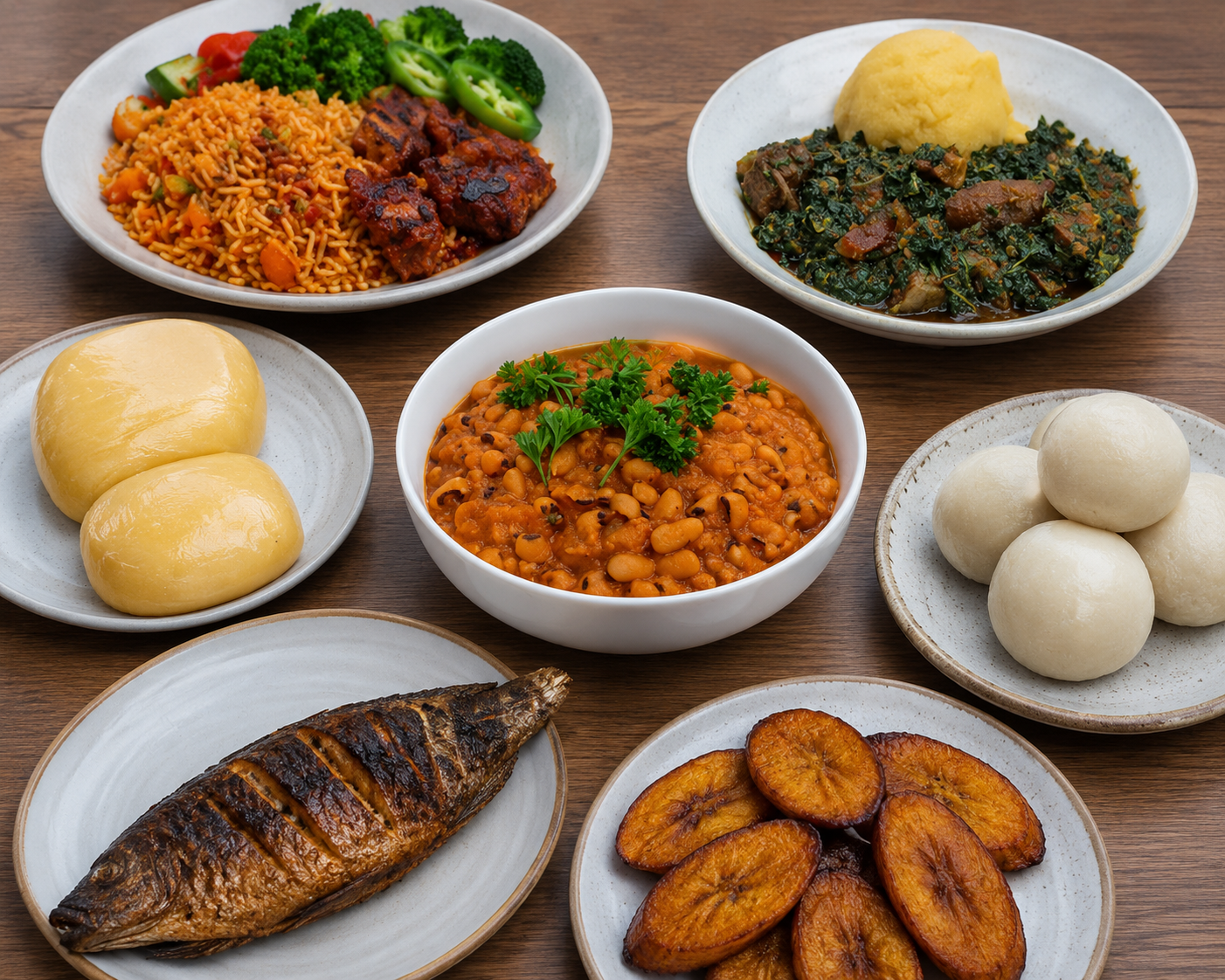
No rice
No yam
No plantain
No swallow
Maybe you have even looked at your kitchen and wondered:
“So what exactly am I supposed to eat?”
I have even heard comments on social media that goes “I’ll just drink water then” (laughs)
If that sounds familiar, here is something important to know.
Living with type 2 diabetes does not automatically mean giving up familiar foods and going on a strict diet.
There is no single “diabetes diet” that is right for everybody. Healthy eating with type 2 diabetes can include familiar foods while taking into account the amount you eat, the type of carbohydrate, what else is in the meal, how the food is prepared and your individual needs.
That means rice does not automatically have to disappear from your plate.
Neither does yam.
Plantain, eba, amala, fufu, pounded yam and other familiar foods do not automatically have to disappear either.
But this does not mean portions do not matter.
The more useful question is often not:
“Am I allowed to eat this?”
It is: “How can I make this food part of a more balanced meal?”
That small change in thinking can make a Nigerian diabetes diet feel much less like a list of restrictions and much more like something you can actually live with.
Can You Still Eat Nigerian Food With Type 2 Diabetes?
Yes, familiar Nigerian foods can still have a place in your diet.
But it helps to understand how the different parts of your meal affect the overall picture.
Many foods we regularly eat in Nigeria; including rice, yam, plantain and cassava-based swallows contain carbohydrate.
Your body breaks carbohydrate down into glucose, which means carbohydrate-containing foods can affect your blood glucose levels.
This is not a reason to become afraid of carbohydrates.
Rather, you need to learn to recognise them and become more aware of how much you are eating.
The amount of carbohydrate you eat can have an important effect on your blood glucose after eating.
So instead of simply deciding that rice is “bad” and vegetables are “good”, start looking at your meal as a whole.
Ask yourself:
- Where is most of the carbohydrate coming from?
- How much am I serving?
- What vegetables or other fibre-rich foods are in the meal?
- What is my protein source?
- How has the meal been prepared?
You are moving away from food rules and towards meal-building skills.
And those are skills you can use whether dinner tonight is rice, yam or your favourite soup and swallow.
How Carbohydrates in Nigerian Foods Affect Blood Sugar
Let’s make carbohydrate easier to understand.
Carbohydrate-containing foods include many foods we eat regularly, such as rice, yam, plantain, garri/eba, amala, semovita, fufu, pounded yam, bread and cereals.
Beans and pulses also contain carbohydrate, even though they provide protein and fibre too.
Fruit contains carbohydrate as well.
This is why simply asking whether a particular Nigerian food is “good for diabetes” does not tell you everything you need to know.
The amount matters.
Imagine two plates containing exactly the same type of rice.
One plate is mostly rice with very little else.
The other contains a more considered portion of rice alongside plenty of vegetables and an appropriate protein source.
They both contain rice but they are not the same meal.
This is one reason portion awareness is so useful.
It is also why you do not need to spend your life searching the internet for a definitive list of Nigerian foods that are “safe” or “unsafe”.
Food is more nuanced than that.
A Simple Way to Balance a Nigerian Plate for Type 2 Diabetes
When you’re not sure where to start, a simple plate guide can help you visualise a more balanced meal.
As a general educational starting point, you can think about approximately:
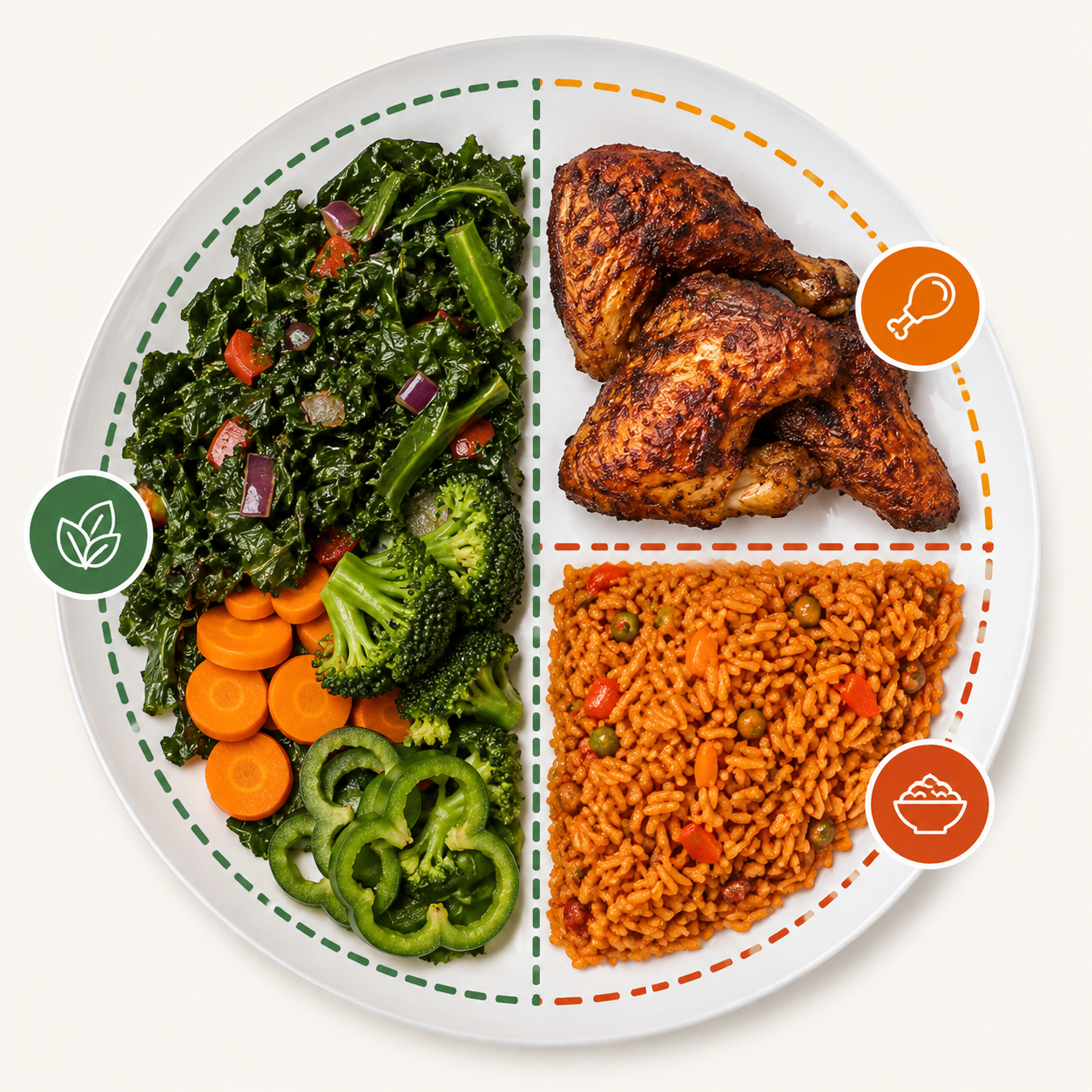
½ of the plate: non-starchy vegetables or salad
¼ of the plate: an appropriate protein source
¼ of the plate: starchy carbohydrate
This is a visual guide not a prescription for every person with type 2 diabetes. But for most persons, whether you have diabetes or not, you can’t go wrong using this guide.
For a Nigerian meal, the principle might mean allowing vegetables or a vegetable-rich soup to take up more space, deliberately including fish, eggs, chicken, lean meat, beans or another suitable protein source, and becoming more aware of the amount of rice, yam, plantain or swallow you serve.
In other words:
You can often keep the Nigerian carbohydrate you enjoy and change the amount and what you eat with it.
That is a very different message from “never eat Nigerian food again”.
Want help putting this into practice?
Knowing the principle is one thing.
Standing in your kitchen looking at rice, stew, yam, beans or swallow and deciding how to put everything together is another.
The Nigerian Diabetes Meal Builder was created to help you practise this with familiar foods.
It walks you through a simple six-step process for recognising the carbohydrate in your meal, checking the amount, adding fibre-rich plant foods, including protein, considering fats and preparation, and making the meal work for your individual needs.
[Download The Nigerian Diabetes Meal Builder]
Can You Eat Rice With Type 2 Diabetes?
Yes, rice can be included.
Rice contains carbohydrate, so portion size matters.
Rather than asking:
“Can I eat rice?”
try asking:
“How much rice am I having, and what am I eating with it?”
You could pair an appropriate rice portion with plenty of vegetables and a protein source such as fish, chicken, lean meat, beans or another protein that fits the meal.
Where practical and acceptable to you, higher-fibre or lower-GI varieties such as brown, basmati or long-grain rice may also be useful choices.
But brown rice is not a magic food, and changing the type of rice does not make portion size irrelevant.
And yes, this principle applies when you’re thinking about dishes such as jollof rice too.
Look beyond the name of the dish.
Think about the rice portion, what else is on your plate and how the overall meal has been prepared.
Can You Eat Yam and Plantain With Diabetes?
Yam
Yam is a starchy carbohydrate.
That does not mean yam is “sugar” or that you have to ban it.
Yam can fit into a balanced diet.
Think about the amount you are eating and what accompanies it.
For example, instead of allowing yam to make up most of the meal, consider how vegetables and an appropriate protein source such as egg or fish could become more prominent.
Preparation and the variety of yam can also affect the glycaemic response, which is another reason simplistic rules about yam are not particularly helpful.
Plantain
Plantain also provides carbohydrate and can be included in an appropriate portion.
Ripeness and preparation may influence its carbohydrate digestibility and how it affects the meal.
How you cook it matters in other ways too.
For example, boiling or baking plantain can reduce the amount of added fat compared with deep-frying.
That does not mean fried plantain needs to become a “forbidden food”.
It means looking at preparation, portion and the rest of your eating pattern rather than deciding a food is either completely good or completely bad.
What About Garri, Eba, Amala, Semovita, Fufu and Pounded Yam?
This is where many people become especially anxious.
You may have heard that one particular swallow is “the best” for diabetes while another should never cross your lips again.
The evidence is not strong enough to make such sweeping claims.
Eba, amala, semovita, fufu and pounded yam are carbohydrate-containing foods.
They can be considered using the same basic principles we have already discussed:
How much are you having?
What are you eating with it?
One practical change is to avoid automatically allowing the swallow to dominate the meal.
Think about the entire combination.
Could you have a small amount of swallow with a generous portion of vegetable-rich soup and an appropriate source of protein such as fish or lean meat?
That allows you to keep a familiar meal while paying more attention to its overall balance.
Is There a Best Swallow for Diabetes?
There isn’t enough consistent evidence to declare one Nigerian swallow the universal “best swallow for diabetes”.
Research looking at the glycaemic index of Nigerian and African foods has produced varying results. Food variety, processing, preparation and other factors can all influence the response.
So be cautious about claims such as:
“Amala is always low GI.”
“Eba is forbidden.”
“This is the only swallow someone with diabetes should eat.”
These statements turn a complicated subject into a simple rule that the evidence does not support.
Instead of spending all your energy trying to identify the perfect swallow, pay attention to portion size and the whole meal.
Nigerian Soups and Stews: Build the Meal Around More Than Swallow
There is enormous variety in Nigerian soups.
That is exactly why it would be misleading to say that every Nigerian soup is automatically healthy or unhealthy.
What is actually in the pot matters.
Vegetable-rich soups can be a useful way to include more vegetables and fibre in your meal.
Fish, lean meat or beans can contribute protein.
At the same time, it is worth being aware of the amount of added oils, fatty meats, salt and stock cubes used in a recipe.
Palm oil is an important traditional ingredient in many Nigerian dishes. It is also high in saturated fat, so moderation is a more useful message than cultural shaming.
You don’t need to strip your soup of everything that makes it recognisable.
Instead, think about ingredients, quantities, preparation and frequency.
And when eating soup with swallow, remember:
The soup does not have to be the small accompaniment to an enormous portion of swallow.
You can change that balance.
Can You Eat Fruit With Type 2 Diabetes?
Yes.
Having type 2 diabetes does not mean you need to stop eating fruit.
Whole fruit provides fibre, vitamins and minerals and can be part of your overall diet.
Fruit does contain carbohydrate, however, so portion awareness still matters.
Spreading fruit across the day rather than eating a large quantity at once can be helpful.
And whole fruit is not the same as drinking large amounts of fruit juice or smoothies, which are easier to consume quickly and should be limited.
So you do not need to automatically remove mango, banana, pineapple or other fruit simply because it tastes sweet.
Think about the amount and your overall eating pattern rather than fearing fruit.
Nigerian Snack Ideas for People With Diabetes
Here is another common misconception:
Having diabetes does not automatically mean you need to eat snacks between every meal.
Some people may include snacks; others may not need them.
If you do snack, portion and overall dietary pattern still matter.
Depending on your individual needs, options could include foods such as:
a sensible portion of whole fruit
vegetables
plain yoghurt
nuts or seeds
suitable wholegrain options.
Frequent sugary drinks, cakes, biscuits, confectionery and similar foods high in free sugars should be limited or better still avoided.
The goal is not to find special foods with “DIABETIC” written across the packet.
It is to understand how your choices fit into your overall way of eating.
Four Things to Think About When Eating Nigerian Foods With Type 2 Diabetes
If all this information feels like a lot, come back to four practical ideas.
1. Amount
How much carbohydrate-containing food are you actually serving?
You do not need to obsess over every mouthful, but becoming more aware of your usual portions is an important starting point.
2. Fibre and carbohydrate quality
Where practical, include higher-fibre carbohydrate choices and foods such as vegetables, wholegrains, beans and pulses.
3. What you eat with the carbohydrate
Nigerian foods are rarely eaten in isolation.
Think about the vegetables, protein and other components of the meal rather than judging the carbohydrate food alone.
4. Preparation
The same food can be prepared in different ways.
Consider cooking methods, added fats, the amount of oil used and the ingredients in the complete dish.
These four questions are far more useful than memorising an enormous list of foods someone on the internet told you never to touch again.
What Could a More Balanced Nigerian Meal Look Like?
There is no single Nigerian diabetic meal plan that will be appropriate for everyone.
But we can apply the principles to familiar combinations.
For example:
Rice meal:
A considered portion of rice + mixed vegetables + an appropriate protein source.
Yam meal:
A considered portion of yam + vegetables + egg, fish or another suitable protein.
Swallow meal:
A smaller portion of your chosen swallow + a generous serving of vegetable-rich soup + fish, lean meat or another appropriate protein source.
Plantain meal:
An appropriate portion of plantain + beans or another protein source + vegetables.
Notice what we have not done.
We haven’t invented a separate collection of strange “diabetic foods”.
We have taken familiar Nigerian foods and asked:
“How can I put this meal together more deliberately?”
That is a skill you can carry from one meal to another.
You Don’t Need a Perfect Plate
There may be days when your meal does not look anything like an illustration of the perfect balanced plate.
That is real life.
At your next meal, try one simple exercise.
Before you start eating, look at your plate and ask:
Where is most of my carbohydrate coming from?
Then ask:
How much am I having?
Next:
Where are my vegetables or other fibre-rich foods?
What is my protein source?
How was this meal prepared?
Those questions can tell you far more about your meal than simply asking whether rice, yam or eba is “good” or “bad”.
The Bottom Line: Portion, Balance and the Whole Meal Matter
So, what can a Nigerian with type 2 diabetes actually eat?
Potentially, many of the familiar foods you already know.
Rice can fit.
Yam can fit.
Plantain can fit.
Eba and other swallows can fit.
Beans and moi moi can fit.
Nigerian soups can fit.
Fruit can fit.
Start learning to recognise your carbohydrate foods.
Become more aware of the amount.
Include vegetables and other fibre-rich plant foods.
Include an appropriate protein source.
Think about fats and preparation.
And remember that your individual needs matter.
Your culture and your health do not have to sit on opposite sides of the table.
You can learn to make more informed choices with the foods you know and love.
Ready to Build Your Own Nigerian Meals?
Knowing what you can eat is a good start.
The next step is knowing how to put those foods together when you’re standing in your kitchen deciding what to cook.
That’s why I created The Nigerian Diabetes Meal Builder.
Rather than giving you a rigid meal plan that tells you exactly what to eat every day, the guide teaches you a repeatable six-step process you can use with familiar Nigerian foods.
You’ll learn to:
Find the carbohydrate in your meal.
Check the amount.
Add fibre-rich plant foods where appropriate.
Include a suitable protein source.
Consider fats and preparation.
Personalise the meal to your needs.
You don’t need another long list of foods to fear.
You need practical skills that help you look at the food in front of you and make a more informed decision.
[Download The Nigerian Diabetes Meal Builder]
An Important Note About Your Individual Needs
This article provides general nutrition education for adults living with type 2 diabetes. It does not replace personalised medical or dietetic advice.
Your needs can be affected by your medication, other health conditions, activity, preferences and goals.
Speak with your diabetes healthcare team or Registered Dietitian before making substantial changes to your carbohydrate intake or meal pattern, particularly if you use insulin or medication that can cause low blood glucose (hypoglycaemia), or if you have other medical or nutritional needs.