How to Eat More Fibre for Blood Sugar Control: Simple Foods and Swaps
If you have type 2 diabetes, prediabetes or insulin resistance, you may spend a lot of time thinking about carbohydrates. There is another part of carbohydrate-containing foods that deserves attention: how to eat more fibre for blood sugar control.
Fibre is found naturally in foods such as vegetables, beans, lentils, whole grains, fruit, nuts and seeds. Eating more fibre-rich foods can be part of an evidence-based approach to managing blood sugar, while also supporting your digestive and heart health.
The good news is that you don’t need to completely change the way you eat or give up foods from your culture to get more fibre.
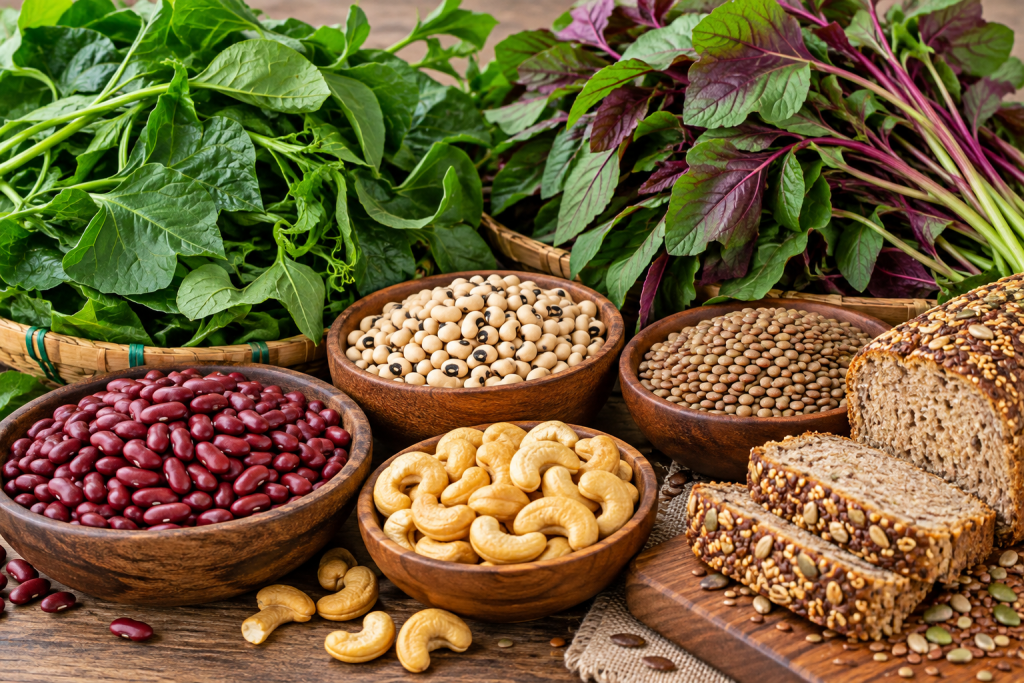
Simple changes, such as adding beans to meals, can increase fibre gradually.
This supports how to eat more fibre for blood sugar control: choose whole fruit over juice and swap refined grains.
Here’s how to do it in a practical, sustainable way.
What Is Fibre?
Fibre is a type of carbohydrate found mainly in plant foods that isn’t fully digested and absorbed in the small intestine.
But fibre isn’t simply something that “blocks sugar.”
Different types of fibre behave differently in the body, and the structure of the food itself matters too. Fibre-rich foods are often less processed and can take longer to digest than highly refined carbohydrate foods.
This can help explain why foods such as beans, lentils and intact whole grains may produce a different blood glucose response from highly refined foods.
Fibre-rich foods may also help you feel fuller, which can support weight management where weight loss is appropriate. Some types of soluble or viscous fibre can also help lower LDL cholesterol—an important consideration because cardiovascular health matters when you are living with diabetes.
The important point is that fibre is one part of the bigger picture.
Eating more fibre doesn’t mean you can ignore how much carbohydrate you eat, your portion sizes, medication, activity levels or the rest of your diet.
How Much Fibre Should You Eat?
In most countries , adults are advised to aim for around 30 grams of fibre per day.
The American Diabetes Association also recommends choosing minimally processed, nutrient-dense, high-fibre sources of carbohydrate and recommends at least 14 grams of fibre for every 1,000 calories consumed.
Research involving people with prediabetes and diabetes has found that increasing dietary fibre can support improvements in blood glucose management as well as other cardiometabolic risk factors.
But you don’t need to obsessively count every gram of fibre you eat.
A more practical place to start is to look at your current meals and ask:
Where could I add or swap in a fibre-rich food?
Here are some simple ideas.
1. Choose Wholegrain Bread More Often
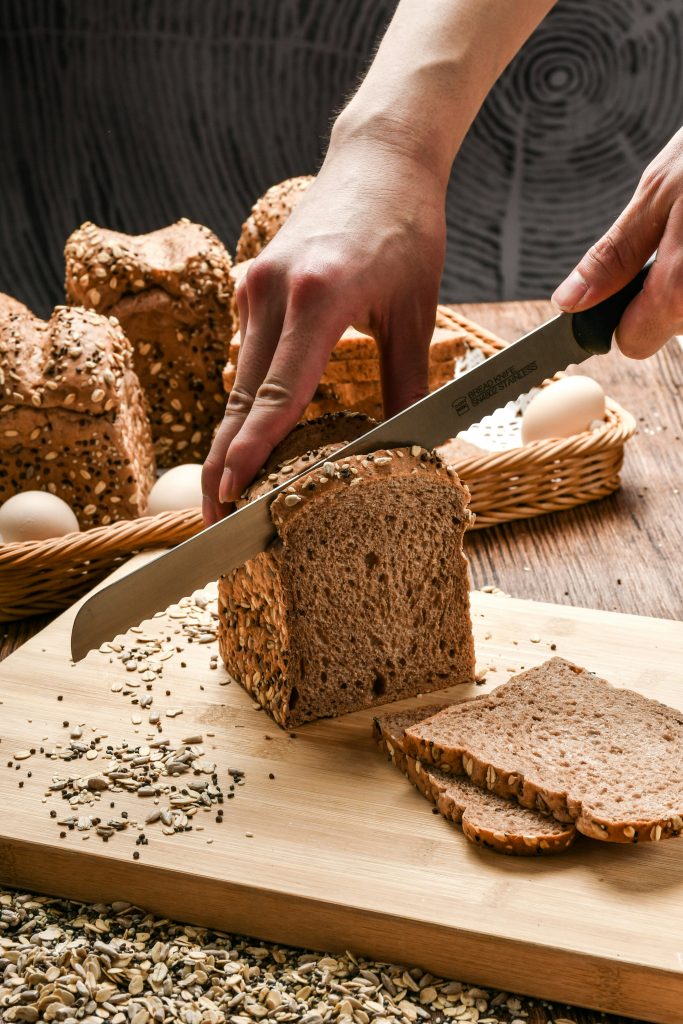
If white bread is your usual choice, try swapping it for wholemeal or wholegrain bread more often.
Wholegrain products retain more of the grain’s fibre than refined versions.
When you’re shopping, don’t assume that bread is high in fibre simply because it looks brown. Check the ingredients and nutrition label rather than relying on colour alone.
You don’t necessarily have to make every change overnight either. Gradually introducing wholegrain options can make the transition easier.
2. Think About your Rice Option
Rice can absolutely be part of your diet when you have diabetes.
Instead of thinking, “I can’t eat rice anymore,” think about how you could make your overall rice meal more fibre-rich.
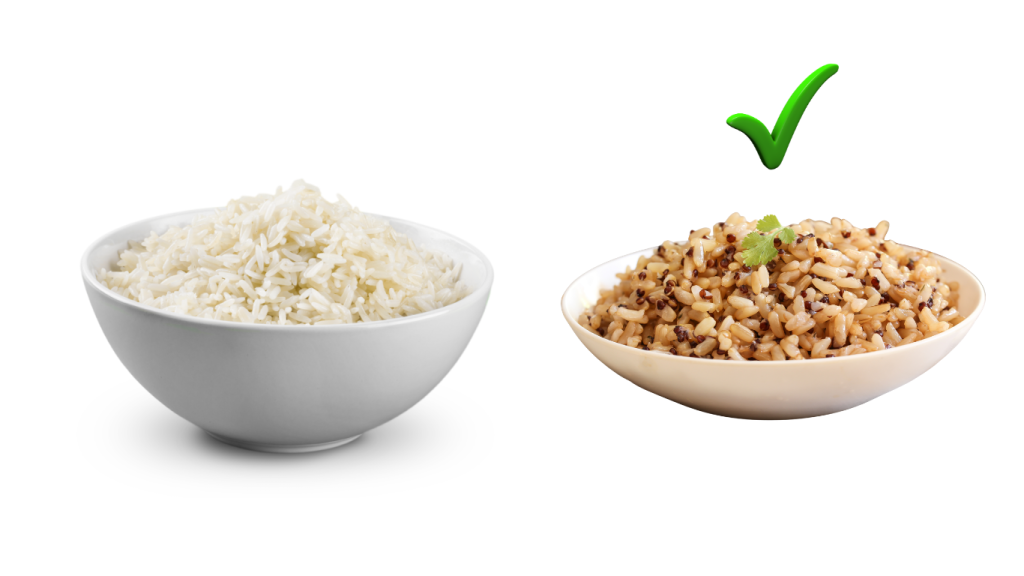
You could try brown rice, for example, or mix brown and white rice if you aren’t ready to switch completely.
Another option is to keep some of your usual rice while adding beans or cowpeas and plenty of vegetables.
For a Nigerian meal, that could mean eating rice alongside beans and a vegetable-rich stew or salad rather than having a large serving of rice as the main component of the meal.
This is a good example of the ThriveWithOly approach:
Add and adapt rather than unnecessarily eliminate.
Remember that brown rice still contains carbohydrate. Choosing a higher-fibre version doesn’t make portions irrelevant or guarantee a particular blood sugar response.
3. Eat More Beans, Lentils and Other Pulses
Beans, lentils, chickpeas and peas are particularly useful foods when you want to increase fibre.
They provide both fibre and plant protein and generally have a relatively low glycaemic impact compared with many refined starches.
Research from randomised controlled trials also supports the role of pulses in improving post-meal glucose, with evidence of modest improvements in longer-term measures of blood glucose management.
For Nigerian and West African diets, beans and cowpeas are especially easy to incorporate because they’re already part of many familiar dishes.
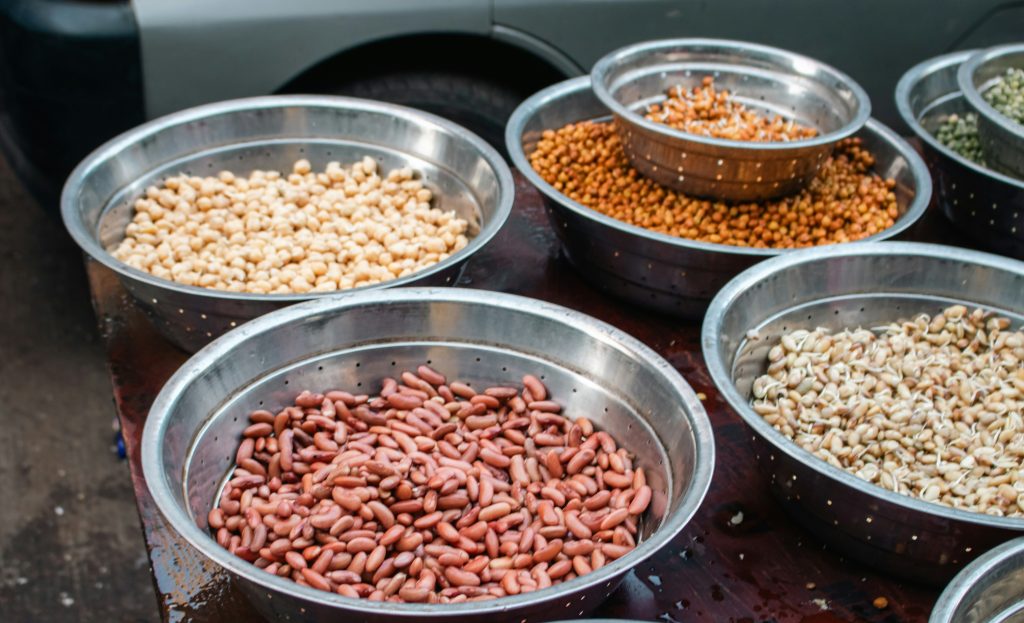
You could:
add beans to rice meals
use beans in soups and stews
add chickpeas or lentils to curries
replace part of the meat in a dish with beans or lentils
choose bean-based dishes such as moi-moi as part of your wider eating pattern
You don’t need to replace meat completely. Even replacing part of the meat in a dish with pulses can increase the fibre content of your meal.
4. Make Vegetables a Bigger Part of Your Meals
One of the simplest ways to increase fibre is to eat more vegetables.
If your meal currently consists mostly of starch and meat or fish, ask yourself:
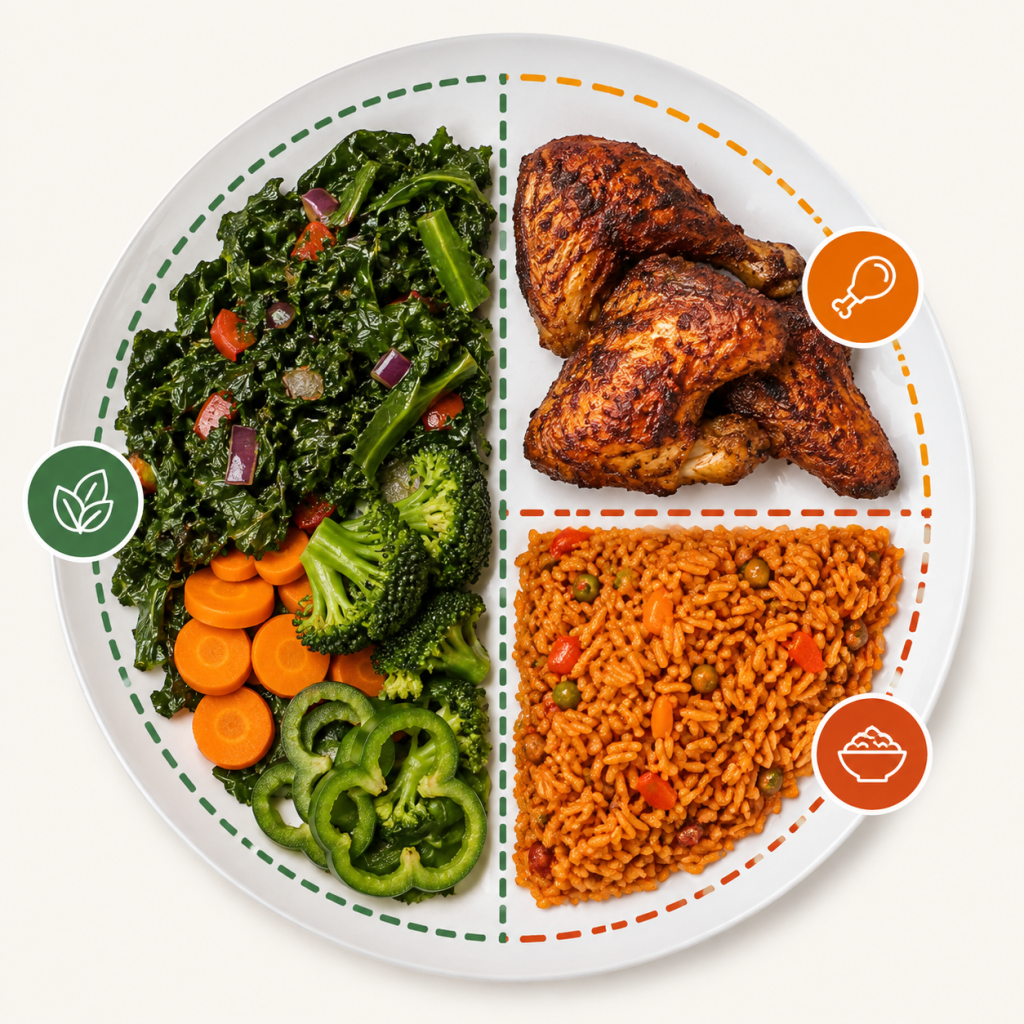
Where are the vegetables?
You could increase the vegetables in soups, stews, curries and sauces or add a vegetable side dish.
This can be particularly helpful with traditional meals.
If you’re having swallow and soup, for example, you don’t necessarily need to stop eating your preferred swallow simply because you are trying to manage your blood sugar.
Instead, keep the portion appropriate for you and look at the whole meal.
Could you make the soup more vegetable-rich? Could you include beans or another pulse elsewhere during the day?
Small changes across your whole eating pattern can add up.
5. Choose Whole Fruit Instead of Juice
Fruit doesn’t need to disappear from your diet because you have diabetes.
Whole fruit is included in recommended healthy eating patterns for people with diabetes.
One important difference between whole fruit and fruit juice is fibre.
Whole fruit retains its natural fibre, while juice contains little or no intact fibre and can be much easier to consume quickly.
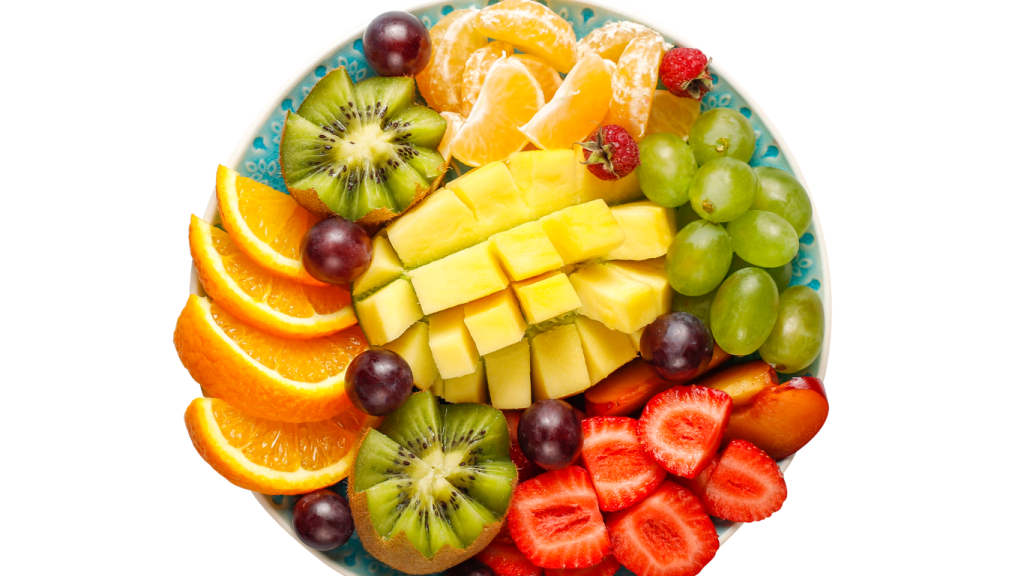
So instead of regularly drinking fruit juice, choose the whole fruit more often.
Apples, pears, berries, oranges, guava and other fruits can all contribute fibre to your diet.
Where the skin is edible and safe to eat, keeping it can provide additional fibre too.
The key is still context and portion. Fibre doesn’t make the carbohydrate in fruit disappear.
6. Tweak Your Breakfast
Breakfast is another easy opportunity to increase fibre.
If you usually eat a low-fibre breakfast cereal, consider trying porridge oats or a higher-fibre wholegrain cereal.
You could then add fruit, nuts or seeds.
For example:
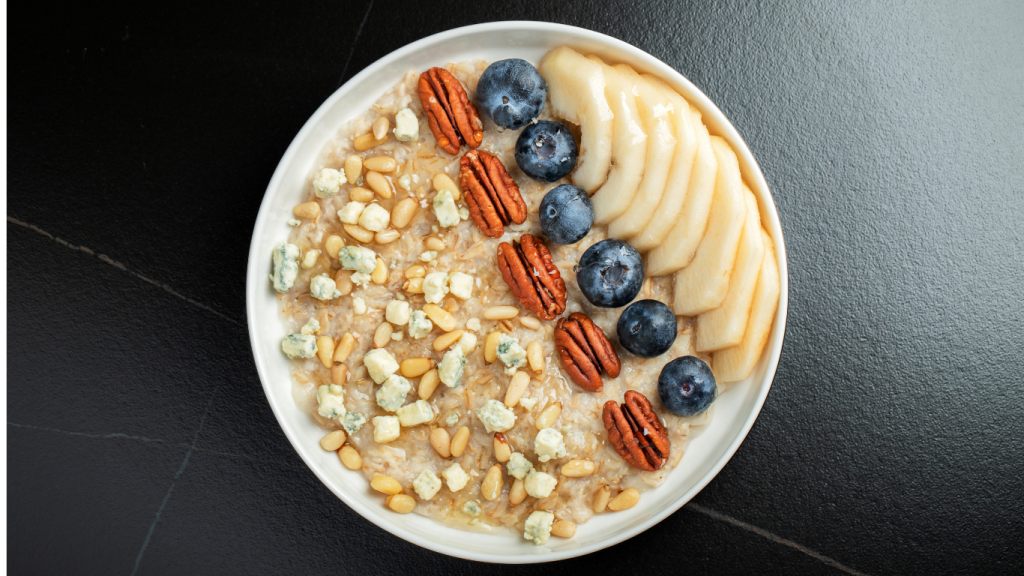
Porridge oats + berries + nuts or seeds give you several fibre-containing foods in one meal without needing a special product marketed for people with diabetes.
If you prefer bread at breakfast, choosing a wholegrain variety is another simple change.
7. Choose higher-fibre snacks
Snacks can contribute useful nutrients or simply add more refined carbohydrate to your day.
Instead of automatically reaching for biscuits or crisps, consider options such as:
- whole fruit with a small portion of nuts
- vegetables with hummus
- roasted chickpeas or beans
- oatcakes
- nuts and seeds
The goal isn’t to create a list of “good” and “bad” foods.
It’s simply to recognise that choosing fibre-rich whole foods more often can improve the overall quality of your diet.
What About Nigerian Foods Such as Yam, Plantain and Swallow?
This is where cultural context matters.
Foods such as yam and plantain contain fibre, but they are also carbohydrate-rich foods. Their fibre content doesn’t mean portion size becomes irrelevant to your post-meal glucose.
Similarly, it is difficult to make one blanket statement about “swallow.”
Different types of swallow are made from different ingredients and processed in different ways. Their fibre content and potential blood glucose effects can therefore vary.
Instead of trying to find one supposedly perfect “diabetes-friendly” swallow, look at the whole meal.
What portion are you eating?
What does the soup contain?
Could you increase the vegetables?
What other fibre-rich foods are you eating throughout the day?
Whole or less-refined grains such as millet and sorghum can also contribute fibre, particularly when more of the grain structure and bran are retained. But processing and preparation can significantly change the final food.
This is why diabetes nutrition is rarely as simple as labelling one traditional food “good” and another “bad.”
Does Fibre Cancel Out Carbohydrates?
No.
This is an important misconception.
Fibre-rich carbohydrate foods can be valuable choices, and some may produce a less rapid glucose response than highly refined foods.
But fibre does not cancel out all the carbohydrate in a meal.
Your blood glucose response can still be affected by the amount you eat, how the food was processed and cooked, what else you eat with it, your medication, activity and your individual physiology.
Think of fibre as part of improving carbohydrate quality, rather than as a trick that makes carbohydrate disappear.
Increase Fibre Gradually
If your current diet is relatively low in fibre, don’t suddenly try to double your intake overnight.
Increasing fibre too quickly can cause bloating and digestive discomfort.
Instead, start with one or two changes.
Perhaps you could:
add beans to two meals this week,
switch your usual juice for whole fruit,
choose wholegrain bread,
or add an extra serving of vegetables to dinner.
Then gradually build from there.
It’s also important to drink enough fluid as you increase your fibre intake.
Some people may need individualised advice before significantly changing their fibre or carbohydrate intake. This includes people with certain gastrointestinal conditions, kidney disease or prescribed low-fibre diets.
If you use insulin or glucose-lowering medicines that can cause hypoglycaemia, significant changes to your usual carbohydrate pattern may also require advice from your diabetes healthcare team.
The Bottom Line
Eating more fibre doesn’t require an expensive “diabetes diet,” special foods or giving up the meals you grew up eating.
- Start with ordinary foods.
- Eat more vegetables.
- Include beans, lentils and other pulses regularly.
- Choose whole fruit more often than juice.
- Try wholegrain alternatives where they work for you.
- Add nuts and seeds.
And when you’re eating familiar cultural foods, think about how you can add, pair, swap and adapt rather than automatically removing them.
Most importantly, remember that fibre is not a magic solution for blood sugar.
It is one part of an overall eating pattern that can support better blood glucose management alongside appropriate portions, physical activity, medication where prescribed and other healthy lifestyle habits.
You don’t have to change everything at once.
Choose one simple fibre-rich swap you can make this week and start there.